



In recent years, one of the most important concerns when buying windows has been sound insulation. This is especially true for those living near roads, schools, subway stations, or shopping districts, who have virtually zero tolerance for noise. Because of this, External Casement Aluminum Window sound insulation performance has become an absolute core indicator when choosing windows.
However, sound insulation is actually far more complex than imagined. Simply replacing a window or a pane of glass won't instantly create quiet. So what exactly affects the sound insulation performance of External Casement Aluminum Window rated windows, and why do some External Casement Aluminum Windows provide instant peace and quiet while others fail to meet expectations?
I. Glass Structure Determines the Lower Limit of Sound Insulation
Many people believe that sound insulation depends entirely on the thickness of the External Casement Aluminum Window frame, but the real determining factor is the glass itself. This is because 80% of noise enters through the glass.
Ordinary double-glazed windows generally offer moderate sound insulation.
Uneven thickness double-glazed windows offer better sound insulation (e.g., 5+12A+8).
Laminated glass offers the most stable sound insulation.
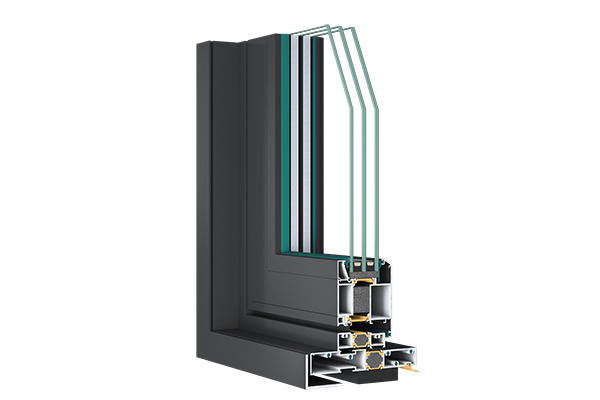
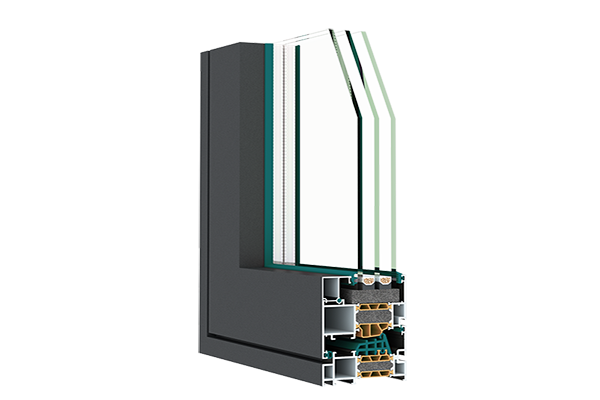
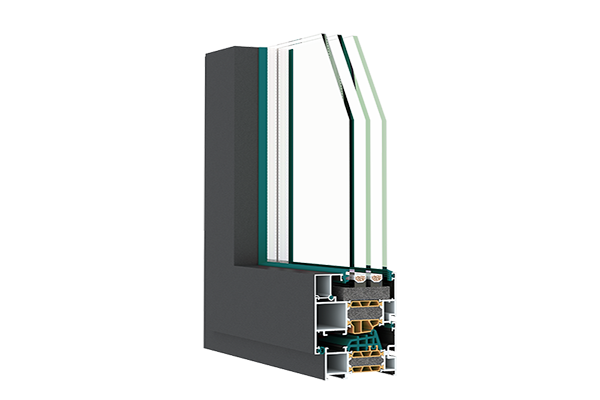
Triple-glazed windows can block the vast majority of noise.
Why is laminated glass better at sound insulation? Because it has a PVB interlayer in the middle, it absorbs sound vibrations, especially effective against high-frequency noise (such as traffic noise and horn sounds).
At Etaifeng, this type of feature is a standard option. We do our own glass processing, so the air gap and interlayer thickness are customizable. Clients near airports or elevated highways typically choose laminated insulated glass with varying thicknesses; once installed, the noise level immediately drops by one level.
II. Better Sealing Structure, Better Sound Insulation
Another crucial but often overlooked aspect of sound insulation is the sealing strip.
Even with the thickest External Casement Aluminum Window galvanized glass, if the sealing strip is inadequate, sound will still seep in through gaps, especially wind and traffic noise, which are particularly prone to being "blown in" through narrow openings.
The main factors affecting sealing include: Sealing strip material (EPDM and EPDM are the most stable); Number of sealing strips (two are better than one, three are better than two); Frame-sash overlap; Hardware closing force. Etaifeng's Waterproof external casement windows generally use three EPDM sealing strips, and some passive windows even use four. Combined with a multi-point locking system, the window closes with a "sticky" feel, indicating excellent sound insulation, airtightness, and watertightness.
III. The strength of the window frame structure and profile affects the stability of sound insulation.
While the glass blocks sound, the window frame is responsible for preventing this sound insulation from being compromised.
The stronger, thicker, and more stable the Waterproof external casement window frame material, the less likely the overall sound insulation performance of the window will be affected by "resonance." If the frame is too thin, vibrations from large vehicles passing by will be transmitted through the Waterproof external casement window frame, significantly reducing the sound insulation effect.
Currently, the most common types are:
✔ Ordinary aluminum alloy windows (average sound insulation)
✔ Thermally broken aluminum alloy windows (better sound insulation)
✔ System windows (highly standardized profiles, most stable sound insulation)
Etaifeng's entire profile production line uses high-strength thermally broken profiles, with thicker walls and more cavities, resulting in a significant sound insulation advantage over ordinary thermally broken profiles, especially for high-rise buildings and large windows, which heavily rely on profile strength.
Sound insulation is a comprehensive reflection of a window's capabilities.
Many factors influence sound insulation, including glass, profiles, sealing strips, hardware, structural design, and installation techniques… It's a complete system performance, not a result determined by a single component.
Because these factors are interconnected, more and more projects, developers, and engineering clients are choosing Waterproof external casement windows. Etaifeng has been working in the field of Waterproof external casement window sound insulation for many years, with its own production lines from profile manufacturing and glass processing to complete window assembly, allowing for tight control over every detail and customized sound insulation solutions based on project requirements. If you have projects requiring soundproofing, we can provide you with glass solutions and performance estimates, making it easier for you to win bids or select the right configuration.
If you are currently working on a construction project, preparing for renovations, or want to learn about more professional Waterproof external casement window soundproofing solutions, you are welcome to contact us anytime. You can visit our factory to see the entire production line, and you can also test the soundproofing effect of our sample windows—seeing the product in person is far more convincing than any explanation.
Etaifeng welcomes you to visit, test, and cooperate with us!
