








How to choose the passive doors and Windows that meet the requirements(I)
Pay attention to the heat transfer coefficient (K value).
As mentioned earlier, the heat transfer coefficient K value is a key indicator for measuring the thermal insulation performance of passive doors and windows. Products with the lowest possible K value should be selected, preferably lower than 0.8 W/(m²·K). For example, for some high-end doors and windows with three-layer insulating glass filled with inert gas (such as argon), the K value can reach around 0.7 - 0.8 W/(m²·K), which can effectively reduce the heat exchange between indoor and outdoor.
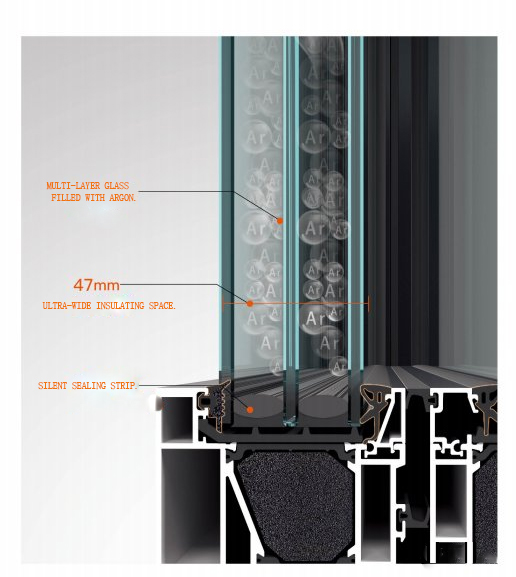
Check the glass configuration.
The number of glass layers and the structure are very important. Three-layer glass has more advantages in thermal insulation than double-layer glass. The middle layer of glass can effectively prevent heat conduction, and the spacer bars between glasses are also important. Warm edge spacer bars (such as spacer bars made of new composite materials) can reduce heat transfer at the edges. Compared with traditional aluminum spacer bars, warm edge spacer bars can reduce heat loss.
The coating technology of glass is also worthy of attention. Low-emissivity (Low-E) coated glass can reflect infrared rays. In winter, it can reflect indoor heat back to the room, and in summer, it can block outdoor heat from entering the room, improving the thermal insulation performance of doors and windows.
