
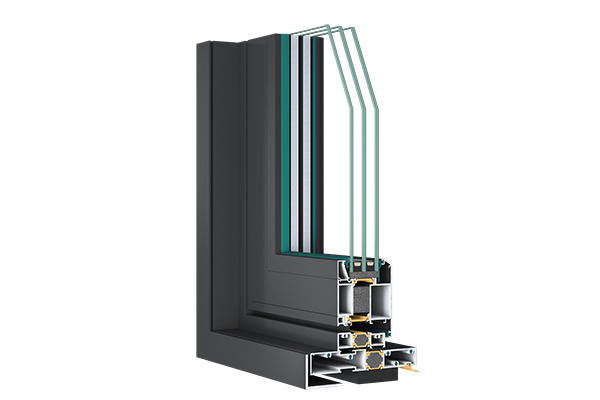
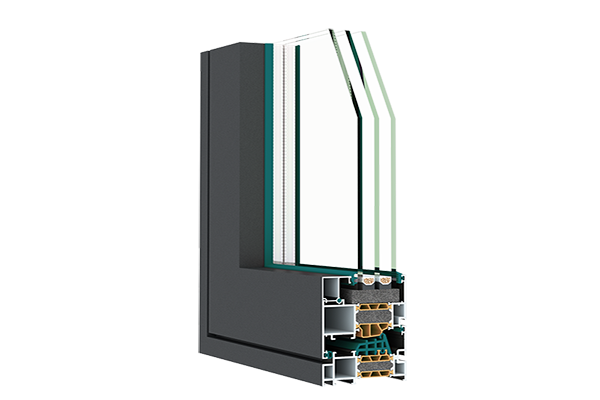

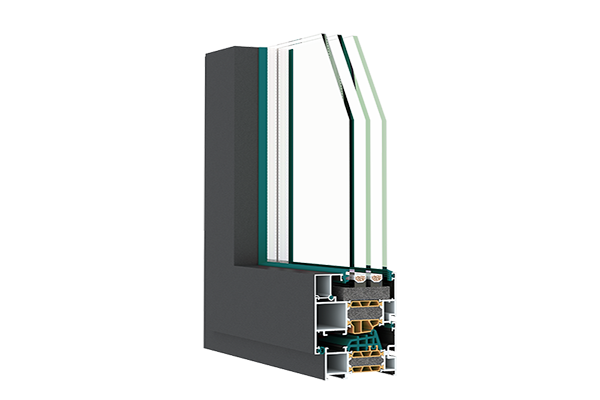


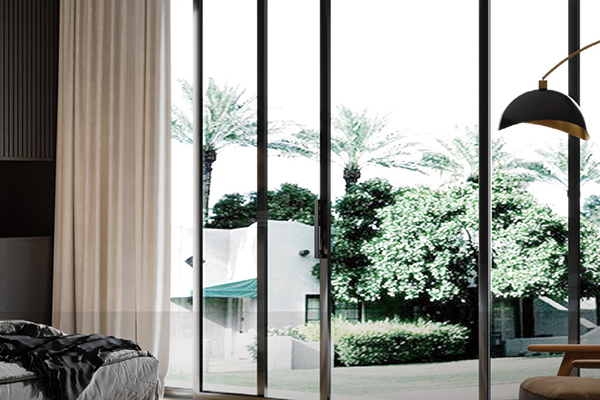
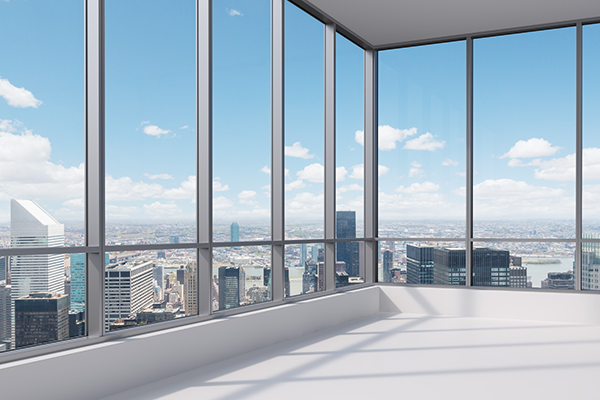
A curtain wall is a non-structural, non-load-bearing exterior wall system that utilizes large amounts of glass in its construction, creating expansive views—but don't confuse it with a picture window.
Whether installed in commercial buildings or residences, curtain walls provide excellent views and ample natural light. They also offer good thermal insulation, allowing you to enjoy the outdoor scenery without enduring the summer heat or winter cold. Since curtain walls primarily do not bear structural loads, their design is only limited by the wall's self-weight, building height, and your design vision. Etaifeng's team of experts can design, manufacture, and install our curtain wall systems.
| Curtain Wall Type | Framed Curtain Wall | Unitized Curtain Wall |
| Installation | Field-assembled onsite | Factory-assembled offsite |
| Construction | A modular system of mullions and rails assembled onsite | Pre-fabricated unit panels installed onsite |
| Cost | Typically lower upfront cost, but higher labor costs | Typically higher upfront cost, but lower labor costs |
| Speed of installation | Slower due to onsite assembly (Further explained below) | Faster due to offsite fabrication (Further explained below) |
| Maintenance | Easier to maintain and replace individual components | More difficult to replace individual components |
| Building Height | Suitable for low to medium height buildings | Suitable for high-rise buildings |
| Thermal Performance | May have more potential for air and water leakage due to onsite assembly | Can have better thermal performance due to factory fabrication and quality control |
Framed Curtain Walls vs. Unitized Curtain Walls
There are some differences between these two types of curtain walls. The main difference, however, is that one uses small panels assembled on-site with screws, while the other is delivered as a complete unit and hoisted into place.
Framed curtain walls
Framed curtain walls consist of metal beams and mullions, and glass panels assembled on-site. The beams are fixed to the concrete slab or building frame, and the mullions are installed between the beams, holding the glass panels in place.
These materials are delivered to your property individually. Installers then arrive at your home or business and assemble the curtain wall piece by piece. This means that the time from ordering and delivery to final assembly is very short. Because the system is modular, it can be built and adjusted on-site as needed. This allows it to adapt to existing spaces, even if those spaces may have irregular dimensions. Special geometric shapes, such as curves, can also be easily accommodated when assembling a framed curtain wall. However, there may be some limitations depending on the design of the beams and mullions. Additionally, the individual components can be transported without heavy equipment, meaning no cranes or lifts are needed to move them between different areas.
Choose framed curtain walls for the following types of projects:
When you don't want to allocate time for off-site manufacturing and transportation.
When the dimensions or shape are unique and require on-site custom installation.
When the construction site or budget limits the use of heavy equipment.
Although there is no waiting time for production cycles, framed curtain walls still require a longer on-site assembly time. However, if the project allows sufficient time for off-site prefabrication and transportation of the curtain wall to the site, there is a faster installation option.
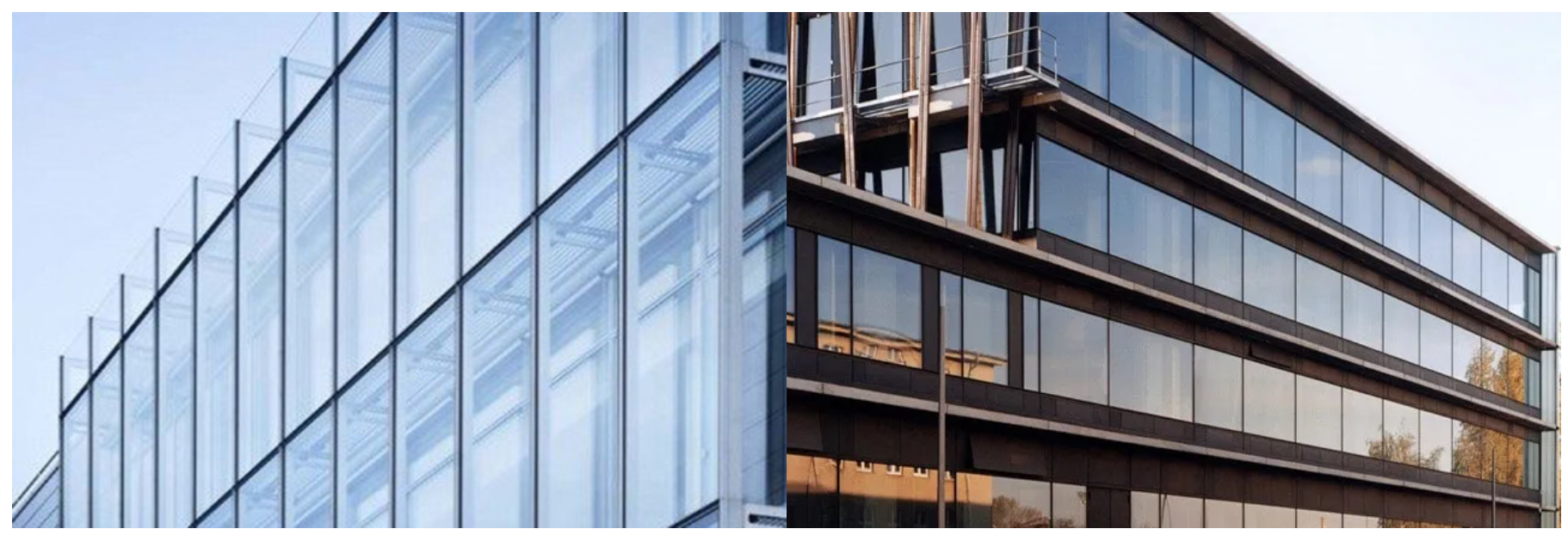
Unitized Curtain Walls
Unitized curtain walls are integrated curtain wall systems where cutting, processing, and glass assembly are completed off-site in a factory. These are then transported to the construction site as complete units for installation. During installation, heavy equipment is used to lift the curtain wall into place and secure it to the floor slabs or frame structure. Because the curtain walls are transported as complete units, installation is faster. It simply involves placing the units into position and bolting them in place.
The disadvantage is the longer lead time required. Off-site assembly takes longer, and after assembly, these large components still need to be transported to the site. If damage or manufacturing errors occur during transportation, rework will take twice as long.
However, with skilled and experienced on-site surveyors and fabricators, installation can be completed in as little as one day. This is a significant advantage when on-site construction time is limited. For example, in the Lake Tahoe area, construction is only permitted during the dry season to prevent soil erosion into the lake.
Unitized curtain walls have fewer joints than stick-built curtain walls, resulting in improved energy efficiency and better protection against external elements such as rain.
For large projects requiring the following features, owners should consider a unitized system:
Simple, straight, and square curtain wall structures with easily determined dimensions.
Faster installation due to on-site factors such as pedestrian traffic or environmental controls.
Located in areas with strong winds or other weather conditions requiring enhanced moisture and wind protection.
The choice between unitized and stick-built curtain walls depends on practical application considerations. Both can create bright, minimalist designs that allow natural light and expansive views while effectively protecting against wind and rain. The deciding factor is construction requirements, not aesthetic design considerations. Regardless of practical considerations, owners should choose experienced and skilled curtain wall construction teams and designers, and craftsmen dedicated to achieving perfection.
Therefore, if you want to transform the look and feel of your space while working with top-tier installers, Etaifeng is the perfect choice.
